5 Common Plant Styling Mistakes That Make Rooms Feel Cluttered
A room can be full of healthy, well-loved plants and still feel heavy. The plants are rarely the problem. The arrangement is. Five pots crammed onto one windowsill, a fern wedged behind the door, a plastic nursery pot rattling around inside a ceramic one that's two sizes too big — none of those are styling decisions, but they all add visual noise.
Clutter in a plant-filled room usually comes down to three things: spacing, scale and repetition. Get those right and the same plants will suddenly look calm and deliberate. Most of the fixes below take minutes, cost nothing, and don't require you to give a single plant away.
1. You're filling gaps instead of leaving space
The instinct when a new plant comes home is to find the nearest free patch of surface. Do that a dozen times and every windowsill, shelf and side table is occupied, and the eye has nowhere to rest. Empty space isn't wasted space — it's what makes the plants you love look intentional.
Try treating each surface as if it has a fixed capacity: three items, and not all of them plants. A shelf with a trailing pothos, a candle and a framed photo will read far calmer than the same shelf holding six pots of varying sizes. If you're unsure where to start, clear one surface completely, look at it empty for a moment, then put back only what you genuinely want to see there.
A few signs you've crossed the line from generous to crowded:
- Leaves from two different pots are touching or tangled
- You have to move a plant to open a curtain or a window
- There are pots hidden behind other pots
- You can't remember what's at the back of the shelf
Odd numbers work well in clusters — three or five. Anything beyond that tends to need its own wall.
2. Everything sits at the same height
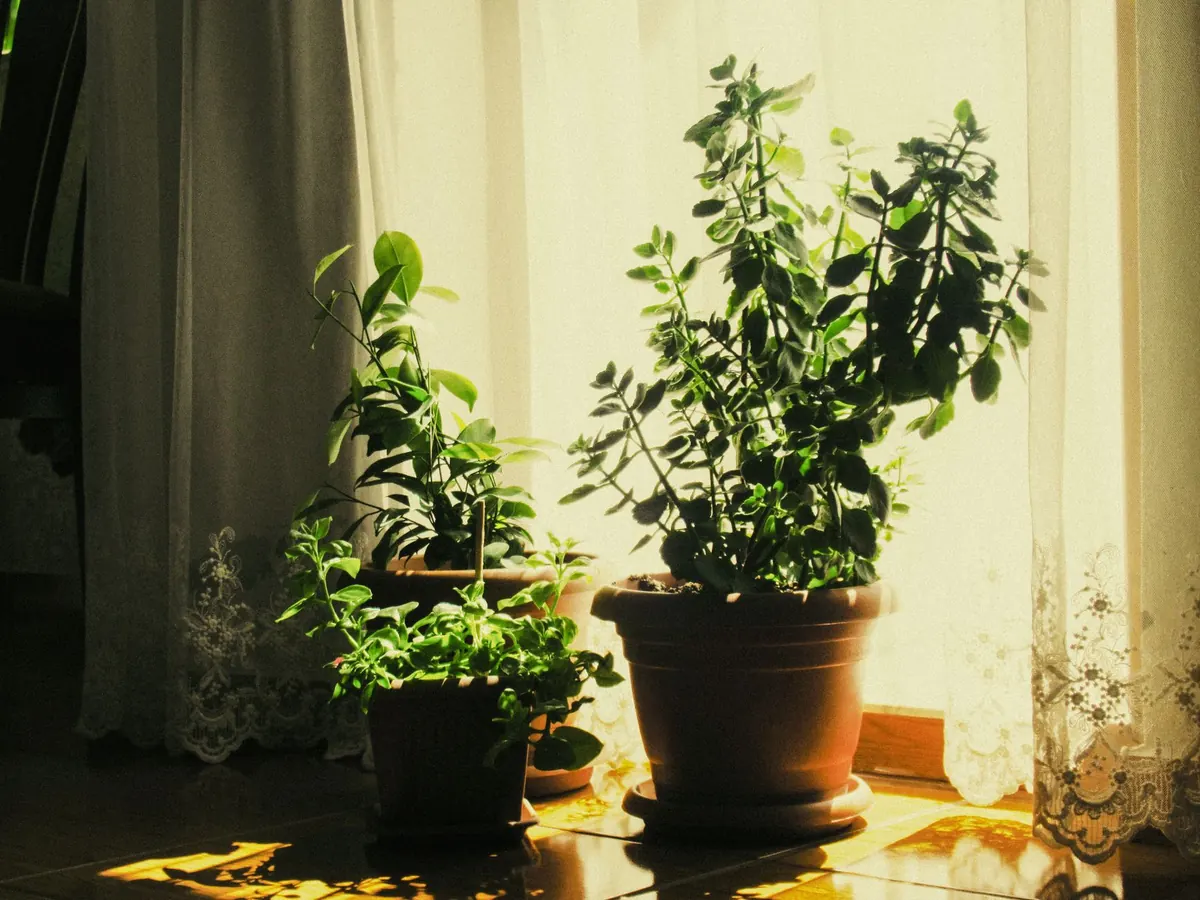
A row of plants at identical height along a windowsill reads as a shelf of greenery rather than a styled arrangement. Height variation is the quickest way to add depth without buying anything.
Lift one plant onto a plant stand, a stool or a stack of two books, and let another trail down past the shelf edge. Move a third to the floor. You've now got three levels instead of one flat line.
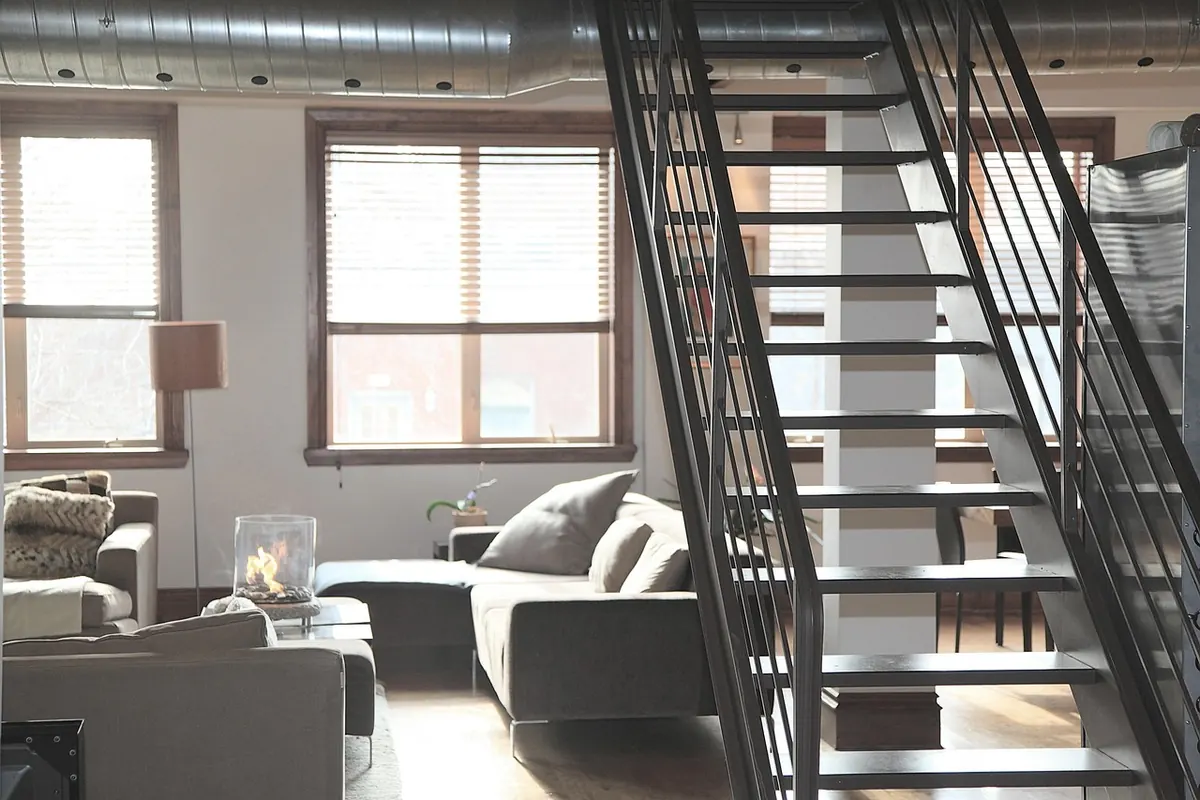
Scale matters just as much. A floor plant should feel like it belongs there: as a rough guide, aim for something that reaches at least the height of your sofa arm, or higher. If a large corner is swallowing a small plant, it will look lost, and the whole corner will feel unresolved. Either go bigger or move the small plant to a smaller spot. For smaller pots on tables, a stand that brings the pot rim up towards eye level will always look better than a pot sitting flat on the surface.
3. The pots are fighting each other
This is the mistake people notice without being able to name. A glossy blue glaze next to matte terracotta next to a novelty animal planter, all on the same shelf, creates a jumble even when each pot is lovely on its own.
Pick one rule and stick to it:
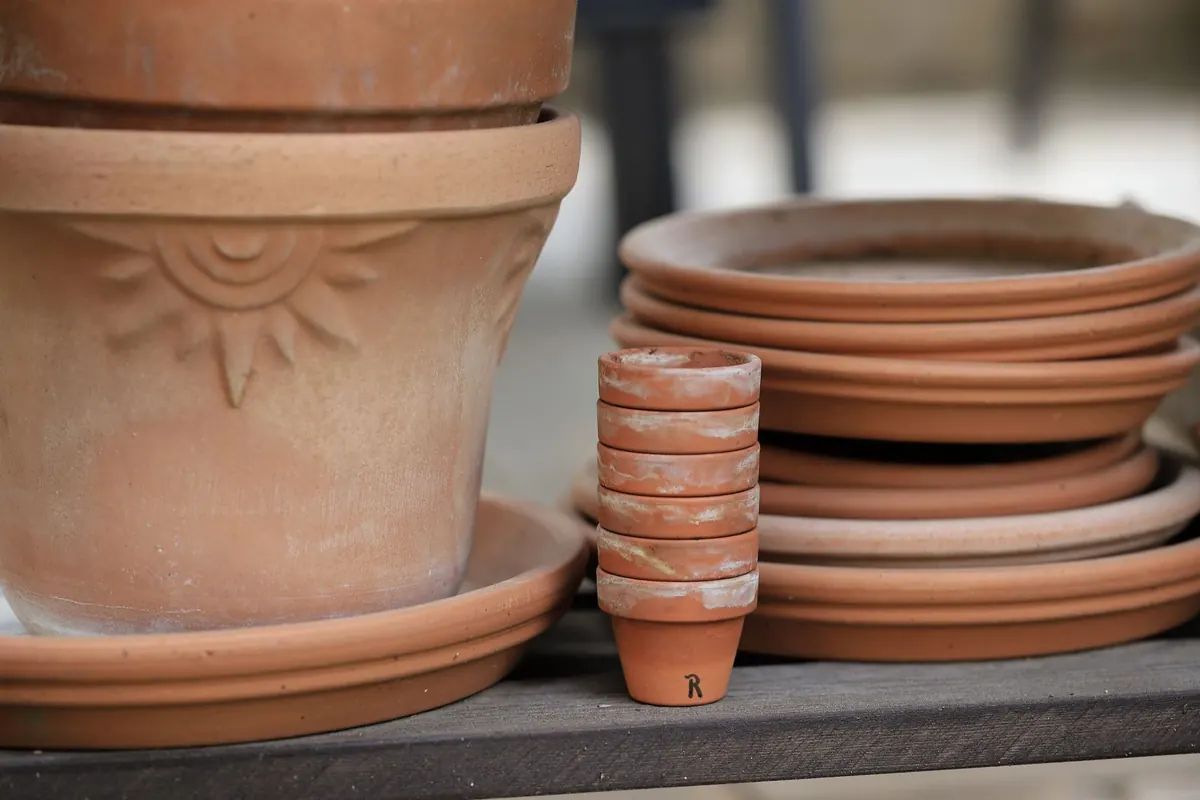
- One colour, mixed shapes. All off-white, or all warm terracotta, in different silhouettes.
- One material, mixed sizes. Unglazed clay throughout, from thumb pot to floor planter.
- Neutral base, one accent. Keep most pots quiet and let a single bold pot earn attention.
Three pots in the same colour family look intentional. Nine pots in nine different finishes look like a collection you're still deciding about.
Also check how your pots nest. A cachepot should be a couple of centimetres wider than the nursery pot at the rim, with the inner pot sitting just below the outer one. If the inner pot is much smaller, it will look like it's floating. Lift it with an upturned small pot or a shallow layer of gravel underneath — and always empty the cachepot after watering so nothing stands in water.
4. Plants are placed by elimination, not by choice
Some plants end up wherever there was room: the dark hallway, the corner behind the sofa, the top of the fridge. Those spots are often chosen because nothing else fitted, and it shows. A plant placed by elimination reads as storage.
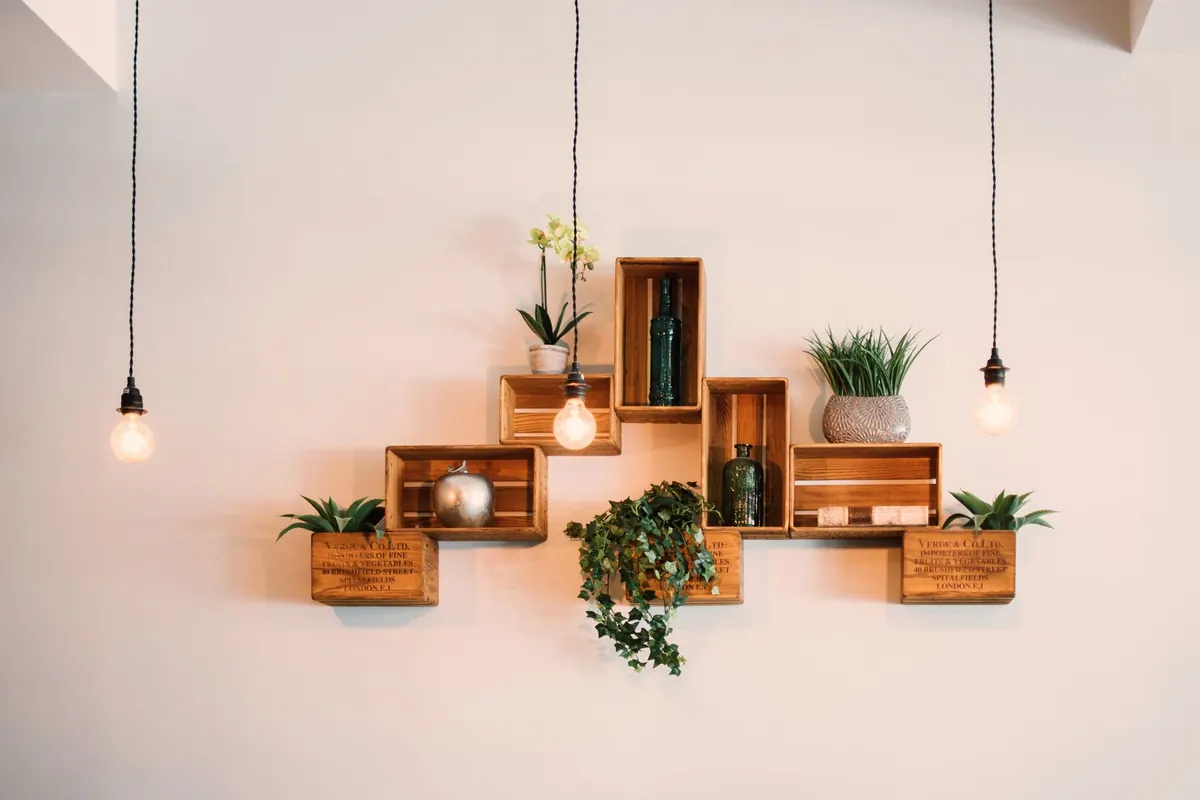
Give each plant a job. A tall, upright plant can soften the hard corner beside a sofa. A low, spreading plant can sit on a coffee table without blocking conversation. A trailing plant can break up a plain stretch of wall at eye level, where its leaves fall past the shelf edge instead of disappearing into it.
If a spot gets no natural light, be honest about it. A low-light-tolerant plant might cope, but it won't thrive, and a struggling plant never makes a room feel calmer. Elsewhere in that space, a lamp, a print or a basket will do more.
5. The arrangement ignores the room's scale and how you use it
Stand in the doorway and half-close your eyes. Where does your gaze land? If all the greenery is on one side, the room will feel lopsided, no matter how good each individual plant looks. One large floor plant on the left can be balanced by a floor lamp, a tall vase or a second, smaller plant on the right.
Then think about traffic. Nothing should be within a door's swing, at ankle height where you walk, or within easy reach of the spot where you put down a mug. Keep trailing growth at least an arm's length from where you sit, so you're not pushing leaves aside every time you reach for the remote. Plants that get knocked, caught or watered by accident are the ones that end up looking tatty.
A calmer room in twenty minutes
- Clear one surface completely and put back three things.
- Take the smallest plant out of the largest empty space and swap it for something with presence.
- Move one pot onto a stand so nothing sits level.
- Choose your pot rule — colour, material or accent — and apply it to the room you see most.
- Empty and wipe the cachepots while you're there.
You don't necessarily need fewer plants. You need fewer competing focal points. Knock the count back on one surface, add a bit of height, tidy the pots into a family, and the same collection that felt chaotic will start to look like a considered, living part of the room.
Photo: IdaT / Pixabay